
How to Protect Floors and Walls When Rearranging Furniture Inside Your Home
Need to Move a Furniture Item in Dubai?
Looking to arrange furniture pickup and delivery between locations? Discuss your item and moving requirements with our team.
Rearranging furniture can give your home a fresh appearance, create more usable space and make a room feel more comfortable. However, moving a sofa, dining table, wardrobe or cabinet across an existing floor can also cause scratches, scuff marks and damage to nearby walls.
The risk is not limited to heavy furniture. Small particles trapped underneath furniture legs, unsuitable sliders, exposed metal fittings and poorly protected corners can also leave marks on floors and painted surfaces.
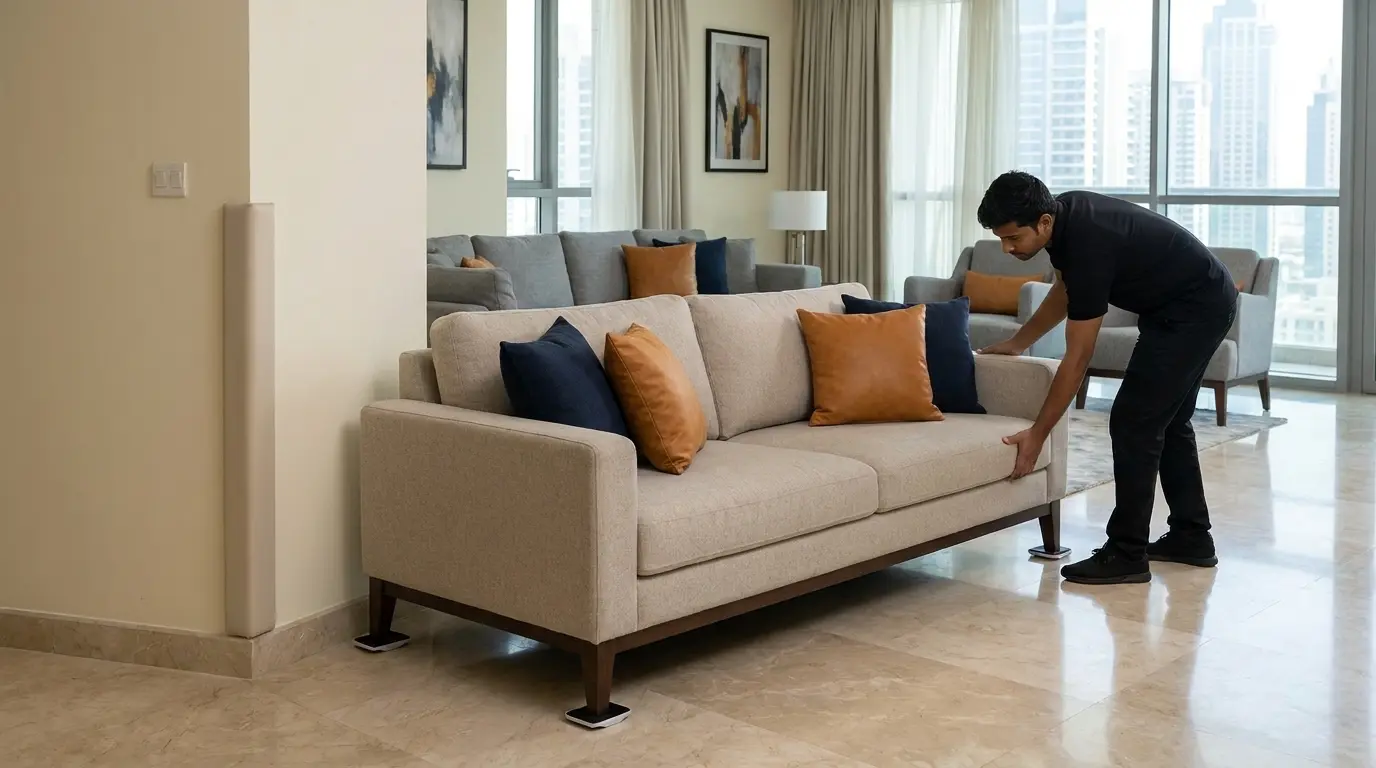
The best way to protect floors and walls when rearranging furniture is to prepare the room, remove dirt from the movement area, choose surface-compatible furniture sliders or protective pads, and prevent furniture from scraping directly against floors and walls.
This guide explains how to protect different flooring materials, reduce wall marks and reposition furniture more carefully inside your home.
Table of Contents
- Why Furniture Rearrangement Can Damage Floors and Walls
- Prepare the Room Before Moving Furniture
- Choose Floor Protection According to Your Flooring Type
- Use Furniture Sliders Correctly
- Protect Walls, Corners and Skirting Boards
- How to Reposition Furniture Without Damaging Your Home
- Common Furniture Rearrangement Mistakes to Avoid
- Dubai Home Considerations
- Frequently Asked Questions
- Conclusion
1. Why Furniture Rearrangement Can Damage Floors and Walls
Furniture is not always designed to move frequently. Its legs, feet, corners and lower edges can create pressure or friction when a heavy item is pushed across a room.
Common causes of damage include:
- Dragging furniture directly across flooring.
- Small stones, sand or dust trapped beneath furniture feet.
- Metal or damaged furniture legs touching the floor.
- Using sliders that are unsuitable for the flooring material.
- Pushing furniture against painted walls.
- Allowing furniture corners to strike skirting boards.
- Moving furniture without clearing nearby objects.
- Using adhesive tape that damages paint or leaves residue.
In Dubai homes, marble and porcelain tiles are common flooring choices, alongside wooden finishes, laminate and carpets. Each surface needs suitable protection rather than one universal solution.
2. Prepare the Room Before Moving Furniture
Before moving anything, prepare the area where the furniture currently stands and the space where it will be placed.
Remove small objects and obstacles
Clear the movement area of:
- Decorative items.
- Floor lamps.
- Small tables.
- Rugs and loose mats.
- Plant pots.
- Toys and cables.
- Items stored underneath furniture.
This creates a clearer space and reduces the possibility of objects being knocked over during repositioning.
Clean the floor
Dust, sand and small particles can become trapped underneath furniture feet or sliders.
Sweep or vacuum the area before moving furniture. Also inspect the floor underneath the furniture once it has been lifted or safely repositioned.
Avoid placing a slider over dirt or debris. Even a suitable protective pad may become abrasive if particles are trapped underneath it.
Check the furniture condition
Look at the bottom of each furniture leg and its contact points with the floor.
Check for:
- Broken or missing feet.
- Exposed screws or metal edges.
- Damaged felt pads.
- Loose legs.
- Uneven furniture supports.
- Sharp or rough surfaces.
Repair or replace damaged components before attempting to reposition the item.
3. Choose Floor Protection According to Your Flooring Type
Different flooring materials respond differently to pressure, friction and protective products.
Choosing the correct protection is more important than simply covering the floor with any available material.
Marble and natural stone floors
Marble and natural stone can develop visible scratches, scuffs and surface marks when furniture is dragged across them.
Consider:
- Cleaning the floor before repositioning furniture.
- Using suitable, clean furniture sliders.
- Protecting vulnerable contact points.
- Avoiding exposed metal furniture feet.
- Using suitable protective boards where heavier items need to be temporarily set down.
Check that any protective material is suitable for polished stone. Avoid applying adhesives directly to the surface unless the flooring manufacturer confirms they are safe.
Wooden and laminate flooring
Wooden and laminate floors can develop scratches and dents from furniture legs, sharp edges and trapped debris.
Useful precautions include:
- Fitting clean felt pads to suitable furniture feet.
- Checking the condition of existing pads.
- Using compatible sliders for short movements.
- Avoiding metal or rough furniture bases.
- Distributing the weight rather than allowing it to rest on one small contact point.
For frequently used furniture, inspect the pads regularly. Worn or dirty pads may no longer provide the protection they were intended to offer.
Porcelain and ceramic tiles
Tiles are generally resistant to ordinary surface scratching, but furniture can still damage tile edges, grout lines and individual tiles if weight is concentrated on a small or hard contact point.
Consider:
- Checking furniture feet for sharp edges.
- Using suitable protective pads.
- Avoiding sudden drops when repositioning furniture.
- Checking for loose or damaged tiles.
- Distributing weight evenly where possible.
Do not assume that every tile surface can safely support the same furniture-moving method.
Vinyl and luxury vinyl flooring
Vinyl flooring can be vulnerable to indentation, scuffing and marks from unsuitable furniture feet or sliders.
Use products specifically suitable for your flooring type. Avoid narrow, hard contact points and check whether rubber or adhesive-backed products are approved for the particular floor finish.
Some materials can leave marks or discolour certain flooring surfaces over time.
Carpet and rugs
Carpets require a different approach from hard floors.
Furniture legs can catch carpet fibres, pull at the pile or create pressure marks.
Useful precautions include:
- Using sliders designed for carpet.
- Checking that the carpet is free of small objects.
- Removing loose rugs from the movement path.
- Avoiding sharp furniture edges.
- Checking the carpet after repositioning.
A slider intended for hardwood may not work properly on carpet. Always check the product's intended surface.
4. Use Furniture Sliders Correctly
Furniture sliders are designed to reduce friction between furniture feet and the floor during controlled repositioning.
They are available in different materials and shapes for different flooring types.
Felt sliders
Felt sliders are commonly used for suitable hard surfaces, including many wooden and laminate floors.
They can help reduce direct friction when furniture is moved carefully.
Keep the felt clean and inspect it for trapped grit or wear.
Plastic sliders
Some plastic sliders are designed for moving furniture across carpets, while others are made for specific hard flooring surfaces.
Do not assume that every plastic slider is suitable for every floor.
Check the product instructions before use.
Rubber and non-slip pads
Rubber or non-slip pads are useful when furniture needs to remain in place rather than slide.
They can help reduce unwanted movement, but their compatibility with the flooring finish should be checked.
Some rubber compounds may leave marks or discolour particular floor materials.
How to position sliders
- Check the furniture's weight and stability.
- Make sure the floor is clean.
- Choose sliders suitable for the flooring.
- Ask another person for assistance with heavy furniture.
- Position the sliders securely beneath the appropriate contact points.
- Move the furniture slowly and under control.
- Stop immediately if a slider catches, shifts or becomes unstable.
Never use sliders as permission to push an unstable or excessively heavy item across a room.
5. Protect Walls, Corners and Skirting Boards
Floor protection alone is not enough. Furniture can also leave marks on painted walls, decorative finishes and skirting boards.
Protect wall corners
Corners are vulnerable when furniture is turned or repositioned close to a wall.
Temporary corner guards or suitable padded protection can help reduce direct contact.
Make sure the protection is stable and does not obstruct the movement area.
Protect painted walls
Painted surfaces can develop scuffs from furniture edges, upholstery and exposed fittings.
Keep a safe gap between furniture and walls wherever possible.
For temporary protection, use a suitable protective barrier rather than applying ordinary adhesive tape directly to painted surfaces.
Protect skirting boards
Skirting boards can be marked when furniture is pushed too close to the wall.
Check the clearance between the furniture and the skirting board before placing the item in its final position.
If necessary, use suitable removable protective padding that does not damage the finish.
Protect furniture as well
Furniture itself can also be scratched while being repositioned.
Moving blankets or padded covers can help protect exposed corners, polished surfaces and delicate finishes.
Make sure the covers are secured so that they do not slip during movement.
6. How to Reposition Furniture Without Damaging Your Home
A little planning makes furniture rearrangement easier.
Follow this practical sequence:
Step 1: Plan the new position
Decide where the furniture will go before moving it. Check that the destination area has enough space and does not obstruct doors, drawers or normal walking routes.
Step 2: Remove loose contents
Empty drawers, cabinets and shelves where necessary. Remove decorative items and detachable accessories that could fall.
Step 3: Prepare the floor
Clean the movement area and check the condition of the furniture's feet.
Step 4: Choose the correct protection
Use suitable pads or sliders for the flooring and protect vulnerable wall corners.
Step 5: Get appropriate assistance
Heavy, large or awkward furniture should not be moved by one person if the item cannot be controlled safely.
Step 6: Reposition gradually
Move the furniture in short, controlled movements. Do not force it if it catches or becomes unstable.
Step 7: Check the final placement
Make sure the furniture is level and stable. Check that doors and drawers open properly and that the furniture does not obstruct normal access.
Step 8: Inspect the surfaces
Look for scratches, scuffs, marks or damage after completing the rearrangement.
7. Common Furniture Rearrangement Mistakes to Avoid
Avoid these common mistakes:
| Mistake | Why it matters |
|---|---|
| Dragging furniture directly | Can scratch floors and damage furniture feet |
| Using the wrong sliders | May cause marks, dents or poor movement |
| Ignoring dust and sand | Debris can become trapped beneath sliders |
| Using damaged felt pads | Worn pads may expose rough furniture surfaces |
| Pushing furniture against walls | Can leave paint marks and damage skirting boards |
| Using unsuitable adhesive tape | May damage paint or leave residue |
| Moving heavy furniture alone | Can reduce control and increase injury risk |
| Ignoring uneven floors | May make furniture unstable during movement |
A protective product should always be suitable for both the furniture and the surface it touches.
8. Dubai Home Considerations
Dubai homes include apartments, villas and different types of residential properties. Flooring, wall finishes and furniture arrangements can vary considerably.
A few practical considerations are worth keeping in mind.
Marble and polished flooring
If your home has polished marble or stone, pay particular attention to dust and grit before repositioning furniture.
Small particles beneath furniture legs can create visible scratches.
Apartment layouts
Some apartments have compact living areas where furniture needs to be moved around corners or between closely spaced pieces.
Clear the surrounding space first so that you can control the movement.
Rental properties
If you live in a rented property, take care of existing floor and wall finishes.
Photographs of the surfaces before and after major furniture rearrangement can provide a useful record of their condition.
Building rules
If furniture needs to be moved through shared corridors, lifts or common areas, check your building management's requirements.
For example, Emaar Community Management's published rules for certain Downtown Dubai properties specify designated loading areas, service lifts and protection of common areas during furniture deliveries and removals. Rules can differ between buildings and communities, so residents should confirm their own property's requirements.
9. Frequently Asked Questions
Find practical information about protecting floors and walls when rearranging furniture.
How can I protect my floors when rearranging furniture?
Clean the floor first, check the furniture feet and use sliders or protective pads suitable for the flooring material. Avoid dragging furniture directly across the surface.
What is the best way to protect marble floors from furniture?
Keep the floor free of dust and grit, use suitable clean sliders or pads and avoid hard or exposed metal furniture feet. For heavy items, use appropriate assistance and surface-compatible protection.
Do furniture sliders work on tile floors?
Some sliders are designed for hard flooring, including tile. Check the manufacturer's instructions and ensure the slider is clean and suitable for your particular surface.
How do I stop furniture from scratching wooden floors?
Fit suitable felt pads to furniture feet, keep them clean and replace them when worn. Use compatible sliders when repositioning furniture.
How can I prevent furniture from marking walls?
Keep furniture away from painted surfaces where possible. Use suitable corner guards or padded protection in vulnerable areas and avoid forcing furniture against walls.
Can rubber pads damage flooring?
Some rubber products can leave marks or cause discolouration on certain finishes. Check flooring and product manufacturer guidance before using them.
Should I use furniture sliders or felt pads?
It depends on the purpose. Sliders help with controlled movement, while felt pads are commonly used beneath furniture that remains in position on suitable hard flooring.
Can I rearrange heavy furniture by myself?
If the furniture is heavy, awkward or difficult to control, do not attempt to move it alone. Get appropriate assistance or professional help.
Conclusion
Rearranging furniture can improve the appearance and functionality of your home, but protecting the existing floors and walls should be part of the process.
Start by preparing the room, cleaning the floor and checking the furniture's contact points. Choose suitable sliders or protective pads for your flooring, protect vulnerable wall corners and move furniture gradually rather than dragging it.
These simple precautions can help reduce scratches, scuffs and other avoidable surface damage.
If you need an individual furniture item collected from another location and delivered to your home, you can also explore the furniture pickup and delivery service in Dubai. The service is for collection and delivery arrangements, rather than routine furniture rearrangement inside your home.
Need Help With Furniture Pickup & Delivery?
Share your furniture details, pickup location and delivery address to discuss your moving requirements with our team.