
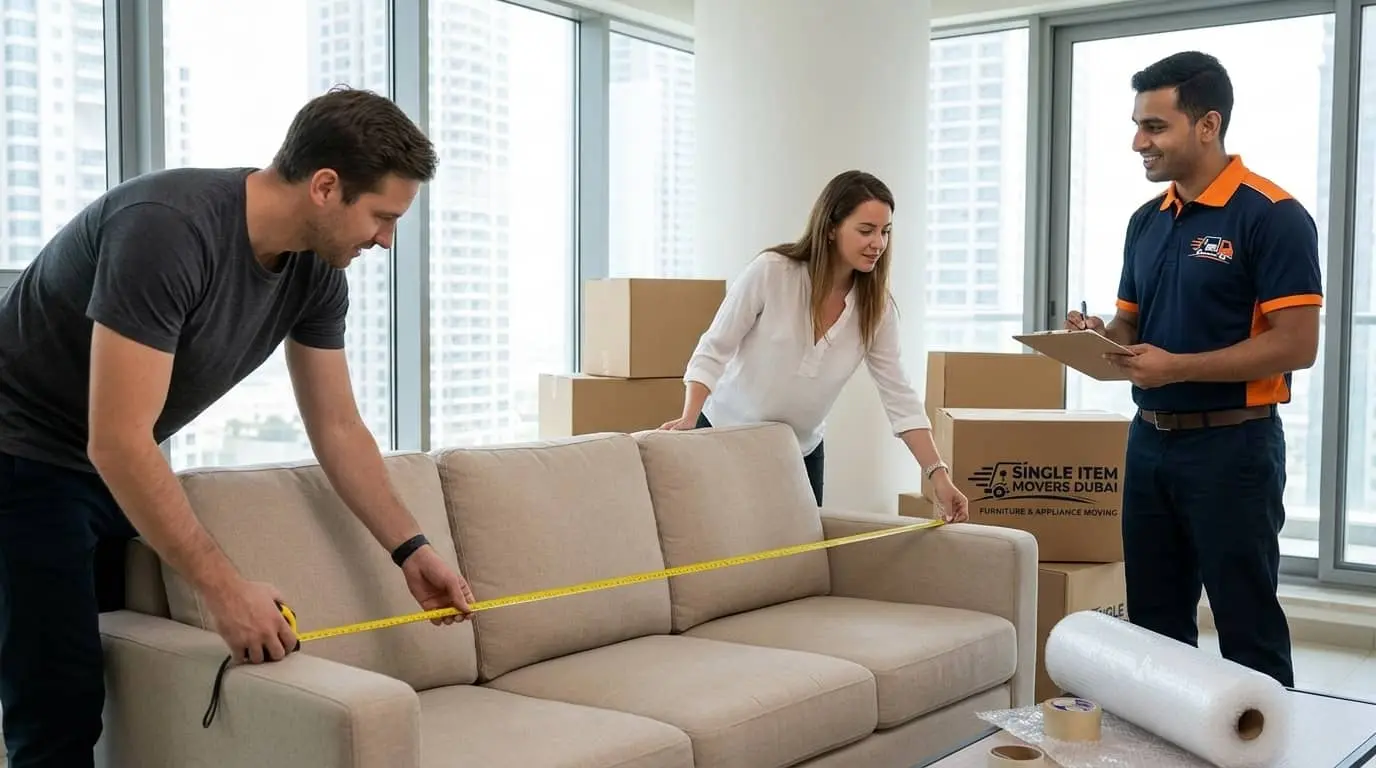
Measuring furniture accurately is an important step before moving, collecting, or delivering large household items. A sofa might fit comfortably inside a living room but still be too wide for a doorway or lift. Taking a few measurements in advance can help you plan the collection properly and reduce unexpected problems.
Whether you are arranging a sofa pickup, moving a bed, collecting a wardrobe, or transporting a dining table, knowing the correct dimensions makes the process easier. This guide explains how to measure furniture at home, what tools to use, which dimensions to record, and how to check whether an item can pass through your building's access points.
1. Why Accurate Furniture Measurements Matter
Furniture dimensions help you understand how much space an item occupies and whether it can be moved safely through the available access routes. Incorrect measurements may lead to problems during collection or delivery, especially when dealing with large or bulky furniture.
Accurate measurements can help you:
- Check whether furniture can pass through doors and corridors.
- Determine whether an item can fit inside a building lift.
- Plan the right collection and delivery arrangements.
- Identify furniture that may need partial disassembly.
- Share useful information with your furniture moving team.
- Reduce the risk of delays caused by unexpected access problems.
2. Tools You Need Before Measuring
You do not need complicated equipment to measure household furniture. A few basic tools are usually enough to record the dimensions accurately.
- Measuring tape: Use a retractable tape measure to check length, width, and height.
- Notebook or phone: Write down each measurement immediately.
- Pen or marker: Useful for noting measurements and identifying separate furniture parts.
- Helper: A second person can hold the tape steady when measuring larger items.
- Camera: Take photographs of the furniture and difficult access points.
Before starting, place the furniture in an accessible position if possible. Remove loose cushions or objects that may interfere with measuring, but do not dismantle the item unless necessary.
3. Furniture Measurements You Should Record
Most furniture measurements involve three main dimensions: length, width, and height. However, depending on the shape and design of an item, you may need additional measurements.
| Measurement | What It Means | Where to Measure |
|---|---|---|
| Length | The longest horizontal dimension | From one end to the other |
| Width / Depth | How far the item extends from front to back | Across the side depth |
| Height | The vertical dimension | From the floor to the highest point |
| Diagonal | Distance across a corner or angled side | Across the relevant diagonal |
| Clearance | Available opening or passage space | Doors, lifts, and corridors |
Always use the same unit when recording dimensions. Centimetres are convenient for most household furniture, while metres may be easier for larger spaces. Avoid mixing units without clearly labelling them.
4. How to Measure a Sofa
Sofas can be difficult to move because of their length, depth, armrests, backrests, and overall shape. A sofa that appears to fit through a doorway may become difficult to manoeuvre around a corner.
Measure the overall length
Place the tape measure across the front of the sofa, from the outside edge of one armrest to the outside edge of the other. Record the full length, including any protruding sections.
Measure the depth
Measure from the frontmost point of the sofa to the backmost point. Include the cushions if they cannot be removed for transportation.
Measure the height
Measure from the floor to the highest point of the backrest. If the sofa has removable legs or cushions, note that separately.
Check the diagonal dimensions
For bulky sofas, the diagonal measurement may help you understand whether the item can be tilted or turned through a doorway. Do not assume that a diagonal measurement alone guarantees access; the available turning space also matters.
5. How to Measure a Bed and Mattress
Beds and mattresses come in different sizes and designs. Some bed frames can be dismantled, while others have fixed headboards, storage sections, or bulky side panels.
For a bed or mattress, record the following:
- Length: Measure from the top end to the bottom end.
- Width: Measure across the widest side.
- Height: Measure the overall height of the frame or mattress, as relevant.
- Headboard: Measure its width, height, and depth separately if it can be removed.
- Bed frame parts: Record the dimensions of large sections if the frame will be dismantled.
If you are moving a complete bed, check whether the frame can be separated into smaller parts. This information can help the moving team plan how to handle the item.
6. How to Measure a Wardrobe
Wardrobes are often among the most challenging household items to move because of their height, depth, doors, shelves, and internal structure. Some wardrobes are delivered as one assembled unit, while others can be dismantled.
Measure these areas carefully:
- Overall width from one outer side to the other.
- Full height from the floor to the top panel.
- Depth from the front edge to the back panel.
- Door dimensions if they can be removed separately.
- Any protruding handles, decorative sections, or fittings.
Also check whether the wardrobe can be safely dismantled. If it contains mirrors or glass panels, mention this when arranging furniture collection.
7. How to Measure Tables and Other Furniture
Dining tables, coffee tables, desks, cabinets, and side tables require slightly different measuring approaches depending on their design.
Dining tables
Measure the tabletop length, width, and overall height. For round tables, record the diameter. If the legs can be removed, note whether the table can be separated into smaller parts.
Office desks
Measure the full desktop dimensions and include attached drawers, shelves, or side extensions. Check whether any sections can be detached before moving.
Coffee tables and side tables
Measure the widest points, including any decorative edges or protruding legs. For glass furniture, mention the material and whether the glass top can be removed.
Cabinets and drawers
Record the full dimensions and check whether drawers, doors, or detachable shelves need to be removed or secured.
8. Check Doorways, Lifts, and Staircases
Measuring the furniture itself is only part of the process. You should also check whether the item can pass through the route between its current location and the collection vehicle.
Doorways
Measure the clear opening width and height of each doorway. Measure the usable space rather than the full door frame, and consider whether the door can open fully.
Corridors and hallways
Check the narrowest points along the route. Pay particular attention to corners, turns, wall projections, and areas where furniture may need to be rotated.
Building lifts
Record the lift's internal width, depth, and height, as well as the clear opening width and height of its doors. Check the building's lift capacity and any restrictions on moving large items.
Staircases
Measure the staircase width, landing space, ceiling clearance, and turning areas. A staircase may have enough width but still have a tight corner that makes moving a large item difficult.
9. How to Record Furniture Measurements
Once you have measured each item, create a simple list so that the information is easy to share. Clearly identify every item and write down its dimensions in the same order.
| Furniture Item | Length | Width / Depth | Height |
|---|---|---|---|
| Sofa | 220 cm | 90 cm | 85 cm |
| Wardrobe | 180 cm | 60 cm | 210 cm |
| Dining Table | 160 cm | 90 cm | 75 cm |
| Bed Frame | 200 cm | 160 cm | 35 cm |
The dimensions above are examples only. Always record the actual measurements of your own furniture rather than relying on standard sizes.
You can also take photographs of each item from the front, side, and back. Share these photographs with your moving team along with the dimensions to give them a clearer understanding of the item.
10. Tips for Measuring Furniture More Accurately
- Measure each item at its widest and tallest points.
- Keep the measuring tape straight and level.
- Ask someone to help with large or heavy furniture.
- Record measurements immediately to avoid confusion.
- Include handles, legs, armrests, and other protruding parts.
- Measure removable sections separately.
- Check the full access route, not just the entrance door.
- Take clear photographs and label each furniture item.
11. Common Furniture Measuring Mistakes to Avoid
Even a small measuring mistake can create difficulties when collecting or delivering bulky furniture. Avoid these common problems:
- Measuring only one side: Record length, width, and height rather than relying on one dimension.
- Ignoring protruding parts: Include handles, armrests, legs, and decorative features.
- Forgetting the lift: Check both lift dimensions and the lift door opening.
- Ignoring tight corners: Measure corridors and turning areas along the route.
- Mixing measurement units: Use centimetres consistently or clearly label each unit.
- Not sharing photographs: Pictures can help explain unusual shapes and difficult access conditions.
- Assuming furniture can be dismantled: Confirm whether the item is designed to come apart before planning around that assumption.
12. Arrange Furniture Collection with the Right Information
Once you have measured your furniture, you can share the details when arranging collection or delivery. Providing accurate information helps the moving team understand the item, access conditions, and any special handling requirements.
If you need help with a single sofa, bed, wardrobe, appliance, or another household item, explore our furniture pickup and delivery service. You can also learn more about our sofa moving service in Dubai and bed and mattress moving service.
Before booking, it is also useful to read what information to share before booking a furniture collection . This can help you prepare the item details, pickup location, access information, and delivery requirements.
Conclusion
Taking accurate furniture measurements at home is a simple but important step before arranging furniture collection or delivery. By recording the length, width, and height of each item and checking doorways, corridors, lifts, and staircases, you can identify potential access issues before moving day.
Keep your measurements organised, take clear photographs, and share the details with your moving team in advance. Proper preparation can make furniture collection and delivery in Dubai easier to plan.
Frequently Asked Questions
Need Furniture Collection in Dubai?
Have your furniture measurements ready? Contact Single Item Movers Dubai to discuss your pickup and delivery requirements. Share your item details and location to get started.